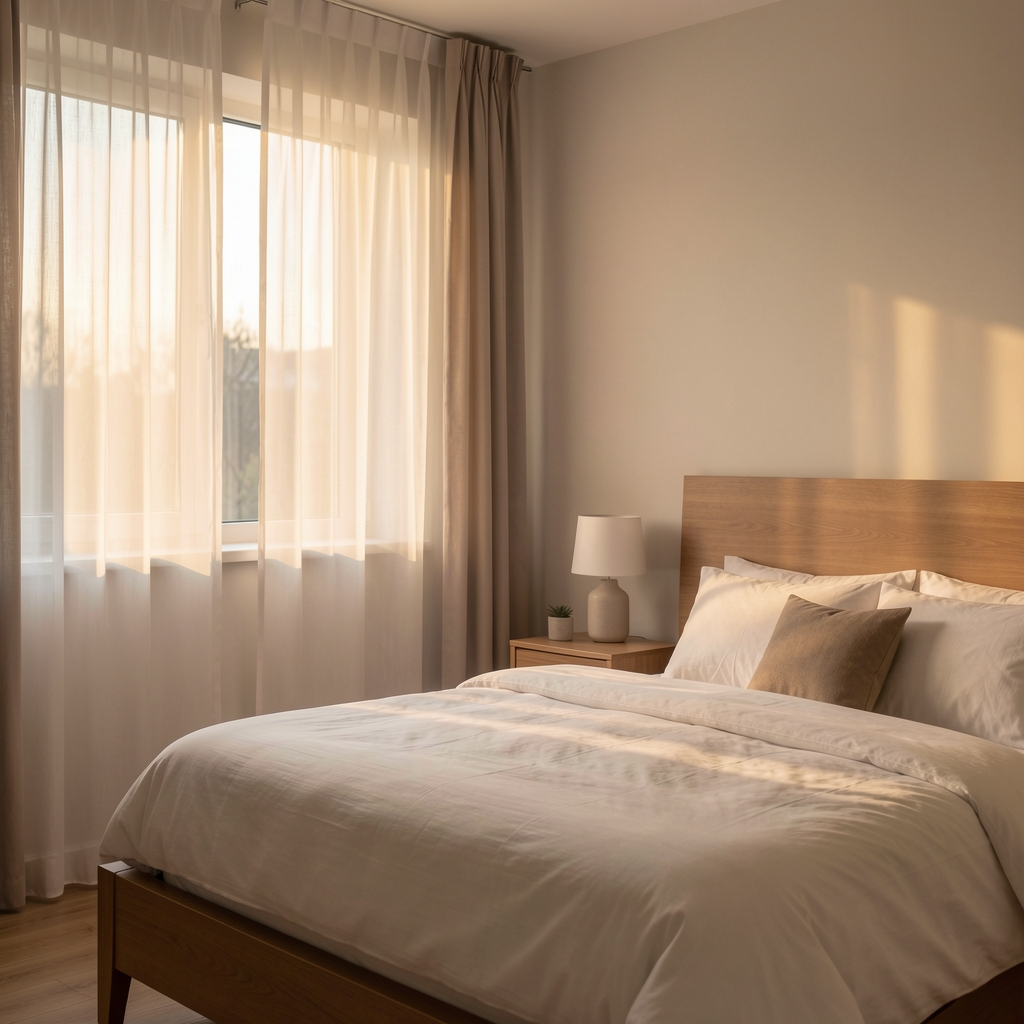
Sleep as a Physiological Necessity, Not a Passive State
For much of modern history, sleep was regarded as a passive withdrawal from waking life — a period of inactivity during which the body simply waited for morning. Contemporary sleep science has substantially revised this picture. Sleep is now understood as a highly active biological process, during which the body performs a range of maintenance, regulatory, and organizational functions that cannot occur with the same efficiency during wakefulness.
For male physiology specifically, the nocturnal period carries particular significance. Several hormonal and regulatory processes are strongly tied to sleep timing and architecture, meaning that the quality and consistency of rest has measurable downstream effects on daytime physiological tone. Understanding the basic structure of sleep is therefore a useful foundation for understanding why rest patterns matter in the context of male well-being.
"Sleep is not the absence of waking — it is a distinct physiological state with its own architecture, purposes, and biological logic."
The Architecture of a Night's Sleep
Human sleep is organized into recurring cycles, each lasting roughly 90 minutes. Within each cycle, the brain and body move through a predictable sequence of stages, broadly categorized as non-REM (NREM) sleep and REM (rapid eye movement) sleep. These stages differ significantly in their physiological characteristics and are understood to serve different functions.
NREM sleep itself is divided into three stages. The lightest stage, N1, represents the transitional zone between wakefulness and sleep. N2, which occupies the largest proportion of total sleep time, is characterized by specific brainwave patterns known as sleep spindles and K-complexes, and is associated with memory consolidation processes. N3, often referred to as slow-wave sleep or deep sleep, is the most physiologically restorative stage, during which the body's maintenance processes are most active.
REM sleep, which becomes progressively longer in the later cycles of the night, is characterized by vivid dreaming, temporary motor inhibition, and rapid eye movements. It is associated with emotional processing and certain forms of memory integration. For male physiology, REM sleep is also associated with episodic hormonal activity that follows a pattern tied to the overall architecture of the sleep period.
Circadian Rhythm: The Body's Internal Clock
Sleep is not simply triggered by fatigue — it is timed. The circadian system, governed by the suprachiasmatic nucleus in the brain, maintains an internal clock with a period of approximately 24 hours. This clock regulates the timing of sleep onset, the transitions between sleep stages, and the timing of numerous physiological processes that unfold during sleep.
Light is the primary environmental signal that synchronizes the circadian clock to the external day-night cycle. Morning light exposure suppresses melatonin and advances the clock; evening light exposure delays it. In environments where artificial light is prevalent after dark, this synchronization mechanism can be disrupted, shifting sleep timing and altering the alignment between the circadian clock and actual sleep periods.
For men living in urban environments — which describes a large and growing proportion of the global male population — circadian disruption from light exposure patterns is a relevant variable. The Indonesian urban context, with its equatorial light cycle and high rates of smartphone and screen use in the evening, is a specific instance of a broadly observed global pattern.
Factors That Support Sleep Architecture
- Consistent sleep and wake timing across the week
- Morning exposure to natural bright light
- Reduced artificial light in the two hours before sleep
- Stable ambient temperature in the sleeping environment
- Low acoustic stimulation during the sleep period
- Physical activity earlier in the day rather than close to sleep
Factors That Commonly Fragment Sleep
- Irregular sleep timing across weekdays and weekends
- Evening screen exposure from phones, tablets, or monitors
- High ambient noise in urban sleeping environments
- Elevated room temperature relative to the body's preferred sleep temperature
- Intake of stimulants in the afternoon or evening hours
- Psychological activation from unresolved stressors near bedtime
Sleep Duration: Context and Variation
The widely cited recommendation of seven to nine hours of sleep for adults represents a population-level observation derived from large epidemiological studies. It describes a range within which the majority of adults appear to function well across a range of measured physiological and cognitive outcomes. It is not a prescription, and it does not account for the full range of individual variation in sleep need.
Sleep need is, to a meaningful degree, genetically determined. A minority of individuals carry variants in genes associated with sleep regulation that allow them to function well on shorter sleep periods without apparent deficit. These individuals are rare, and the tendency to self-identify as one of them without genetic confirmation is extremely common. Most people who believe they function well on five or six hours are accumulating a gradual physiological deficit that affects performance and regulation in ways that are difficult to perceive subjectively.
Age is another relevant variable. Sleep architecture shifts across the male lifespan — deep slow-wave sleep, in particular, tends to decrease with age, while sleep becomes lighter and more fragmented. These changes are normative, and their relationship to other aspects of male physiological aging is an active area of research.
"The gap between perceived sleep sufficiency and actual physiological rest is one of the most common and least recognized features of modern male health patterns."
Common Misconceptions About Sleep and Male Well-Being
Several persistent beliefs about sleep warrant direct examination. The idea that the body fully adapts to chronic short sleep — that one "gets used to" less rest — is not supported by physiological evidence. What does occur is a reduced subjective sense of sleepiness, which creates the misleading impression of adaptation while underlying physiological deficits accumulate.
The notion that weekend sleep can fully compensate for weekday deficits, sometimes called "sleep banking" or "recovery sleep," is similarly overstated. Some recovery does occur, but certain aspects of sleep debt — particularly those related to physiological regulatory processes — do not appear to fully normalize with delayed compensatory sleep. The consistency of sleep timing, not just total hours across a week, appears to matter independently.
Finally, the association between reduced sleep and increased productivity, still embedded in some professional and cultural contexts, conflicts with substantial evidence that cognitive performance, decision quality, and physiological regulation all decline measurably with inadequate sleep, regardless of subjective confidence in one's own performance.
Sleep Glossary: Key Terms
Circadian Rhythm
The approximately 24-hour internal biological cycle that governs the timing of sleep, wakefulness, hormone release, and many other physiological processes. Synchronized primarily by light exposure.
Slow-Wave Sleep (SWS)
The deepest stage of non-REM sleep, characterized by large-amplitude, low-frequency brain waves. Associated with physical restoration and the consolidation of declarative memory.
REM Sleep
Rapid Eye Movement sleep, characterized by vivid dreaming, motor inhibition, and brain activity patterns resembling wakefulness. Associated with emotional regulation and certain forms of memory processing.
Sleep Architecture
The overall structural organization of a sleep period, including the sequence, duration, and cycling of NREM and REM stages. Disruption of architecture affects the functional outcomes of sleep independently of total duration.
Melatonin
A hormone produced by the pineal gland in response to darkness. Melatonin signals the body's biological clock that nighttime has arrived, facilitating the onset of sleep. Its release is suppressed by light, particularly blue-spectrum light.
Sleep Debt
The cumulative deficit between the amount of sleep obtained and the amount physiologically required. Sleep debt accumulates with repeated insufficient sleep and is only partially resolved by compensatory rest.